Research & Inquiry
Questions and participation can open pathways for closer investigation and knowledge production.
 TIDAInstitute for Social Inquiry
TIDA Studio
TIDA Studio is an interactive space connecting society with research, inquiry, and public dialogue. We begin with people’s questions, experiences, perceptions, and the interactions that form around social, political, and cultural issues.
The Studio does not only present knowledge to the public. It also creates ways for people to contribute initial material that may later be explored through dialogue or, where a defined methodology exists, developed into research.
We Begin with Society
See how the Studio worksA connecting space
The Studio connects TIDA’s core work. It is not a substitute for a research department, a learning programme, or public dialogue; it is one of the interfaces through which they can meet.
Questions and participation can open pathways for closer investigation and knowledge production.
Methods and findings can become workshops, training modules, methodological labs, learning resources, and opportunities to exchange practice and strengthen capacity.
Different experiences and interpretations meet in structured spaces, while knowledge returns to society through accessible dialogue that can generate new questions.
The interactive model
The process may begin at any stage: with a participant’s question, a social phenomenon, a dialogue that reveals different perceptions, or survey findings that call for closer inquiry. Not every interaction is research, but some can become research material through an explicit and ethical methodology.
I Have a Question
What can one question reveal about everyday life?
Each inquiry begins with a question connected to everyday life, social relations, or a transformation people are living through. The Studio can publish it in written, audio, or visual form and, when the appropriate tools are ready, invite written responses, short surveys, and new questions from the public.
Responses may reveal differences in concepts, perceptions, and social experience. They are not automatically treated as a representative sample of society. Questions that merit closer attention may later develop into dialogue or a defined inquiry.
From a one-way question to shared inquiry


Signal
Signal tracks events, behaviours, and shifts in public discourse that deserve social interpretation. A political event, changing narrative, identity question, rights issue, or relationship between groups can become a starting point for context, participation, and analysis.
Computational tools may help identify patterns of exclusion, discrimination, polarization, or hate speech, but interpretation remains human and attentive to social and linguistic context.
From following an event to understanding what it reveals
One Question, Many Places
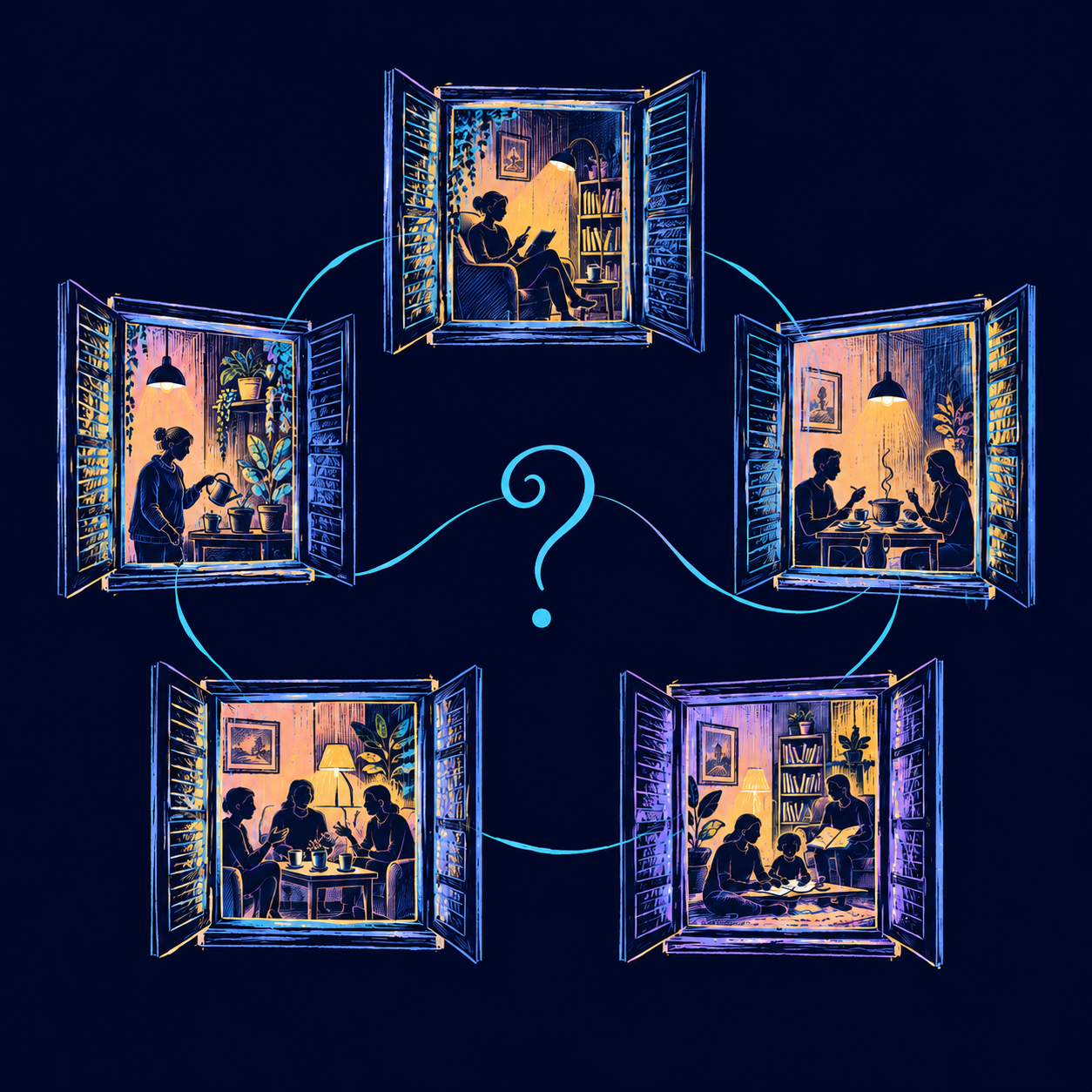
A shared question is explored across different social or geographical settings. A comparison may connect cities in one country, places across countries, urban and rural communities, social groups, or communities that extend across borders.
The research design determines the number of places, the variables, and how participants are selected. Responses are compared without claiming to represent all residents of a city or country.
The same question, interpreted through different contexts
Listening Room
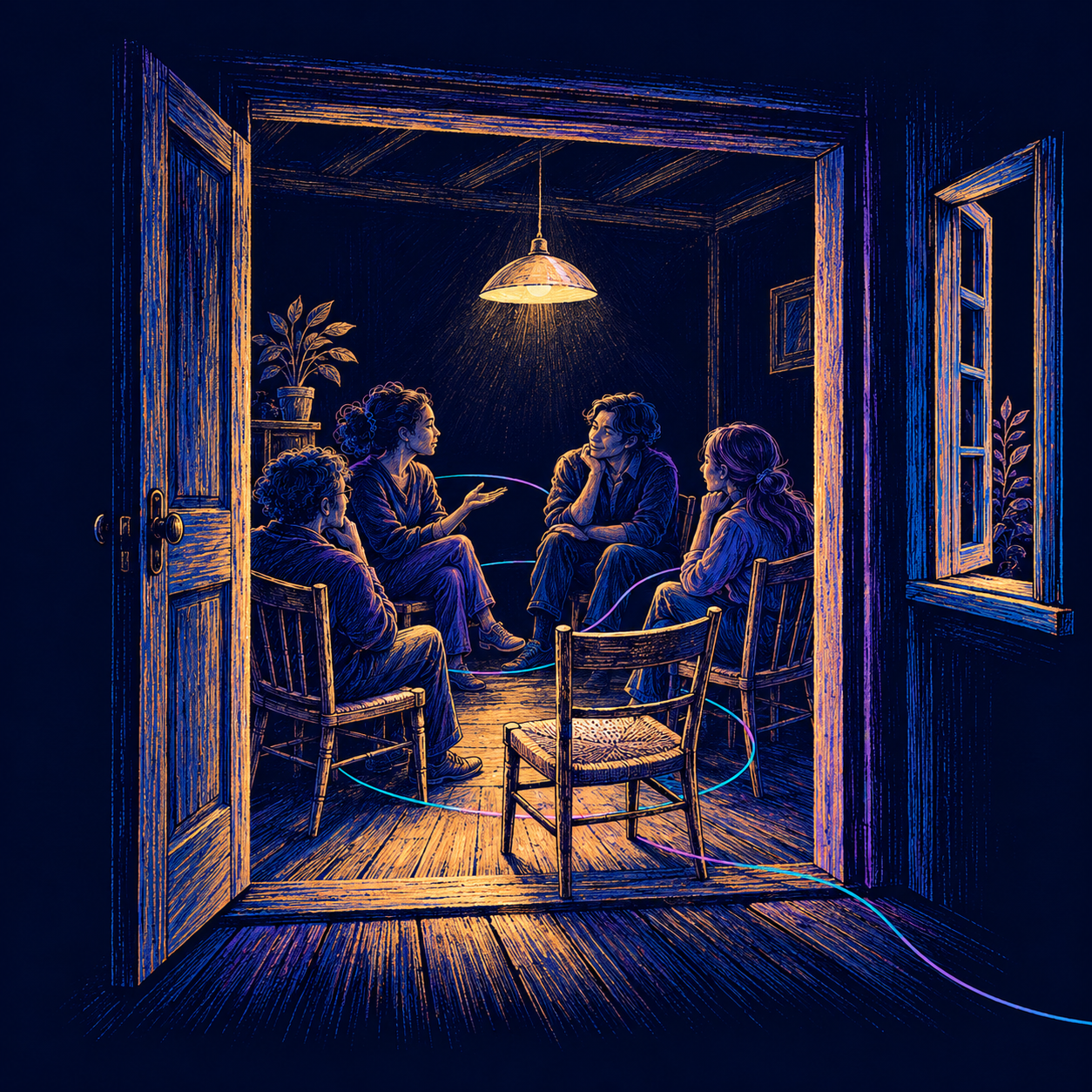
A safe and structured space for experiences, opinions, and narratives that may receive too little room in public debate. It can take the form of small dialogues, focus groups, synchronous or asynchronous virtual conversations, or listening sessions linked to a research project.
Taking part does not automatically mean consenting to recording, publication, or research use. The conditions of participation and privacy are defined in advance for each activity.
Understanding social experience through listening and dialogue
More than one format
A published product can begin a cycle of interaction rather than end it. A recorded conversation can lead to responses, a survey, a follow-up dialogue, analysis, training, or practical recommendations.
Recorded conversations and podcasts, video interviews, short films, visual stories, written texts, audio accounts, graphics, and presentations of findings.
Written or audio responses, focused comments, short surveys, submitted questions or experiences, moderated discussions, priority-setting, and invitations to deeper inquiry.
Two complementary uses
The Studio opens questions and issues to public participation and creates independent knowledge and dialogue outputs.
Surveys, dialogues, and response analysis can support projects with a defined design, implemented by TIDA with researchers and partners.
A shared digital structure
The programmes do not need four separate platforms. A shared structure can support different questions, inquiries, surveys, and dialogues while keeping public participation separate from authorized research and administration.
Multilingual questions, written contributions, and short surveys adapted to each programme.
Synchronous or time-limited conversations, using existing meeting tools when they are suitable and safe.
Authorized researchers organize, classify, compare, analyze, and export qualitative and quantitative material.
After scientific and editorial review, selected findings may become recommendations, practical proposals, policy briefs or papers, reports, training resources, audiovisual productions, or new dialogues.
Privacy & research ethics
General engagement data is different from research-participant data. Before research participation is activated, each activity must define its purpose, lawful basis, privacy notice, consent where required, retention and deletion periods, and the permissions granted to researchers and partners.
High-risk projects may require a data-protection impact assessment. Sensitive data is not sent to external artificial-intelligence services without appropriate safeguards, and automated analysis never replaces methodological and human review.
From participation to knowledge
We verify facts, identify sources, connect experience to context, and distinguish evidence, analysis, and opinion. Selected findings are published only after scientific and editorial review, with an explanation of how material was collected and what conclusions it can — and cannot — support.
Explore TIDA’s approachDeveloping step by step
The Studio will grow through tested stages rather than by collecting the largest possible number of interactions.
Define each programme’s method, consent pathway, formats, and intended outputs
Pilot I Have a Question with a suitable response form and internal review
Test comparison across places and a virtual Listening Room
Integrate research analysis with clear human oversight
Connect the tools with research, learning, and partnerships
TIDA Studio is not simply a place where we publish questions. It is a space where we open questions to society, listen to responses, investigate what they reveal, and turn what we learn into knowledge that can be shared.
We Begin with Society
This page introduces the programmes and their planned functions. It does not currently collect questions, personal accounts, survey responses, or recordings. Participation tools will appear only when they are operational and when the conditions for each activity are published.